Follow fisherbrothers on Twitter

Como o Design de Jogos Promove a Jogabilidade Responsável

Nos últimos anos, a indústria de jogos de azar tem se dedicado cada vez mais a implementar estratégias que promovam uma experiência segura e responsável para os jogadores. Uma das principais abordagens nesse esforço é o desenvolvimento de jogos com design responsável, cujo objetivo é reduzir o risco de dependência e incentivar práticas de jogo equilibradas. Neste artigo, exploraremos como o design de jogos pode atuar como uma ferramenta eficaz na promoção da jogabilidade responsável.

Entendendo o Papel do Design na Jogabilidade Responsável

O design de jogos não se limita apenas à estética ou à mecânica de entretenimento; ele também desempenha um papel fundamental na criação de ambientes de jogo seguros. Ao incorporar elementos que incentivem o controle do jogo, os desenvolvedores podem ajudar a minimizar comportamentos de risco, como o jogo compulsivo e o endividamento. Isso é especialmente importante em plataformas de apostas online, onde o acesso é facilmente acessível, como ocorre em sites como o https://x3bet-pt.com/.

Elementos-chave do design responsável em jogos de azar

  • Limites de apostas e tempo: Permitem que os jogadores estabeleçam limites diários, semanais ou mensais, controlando quanto podem apostar ou quanto tempo dedicam ao jogo.
  • Sinalização de atividades de risco: Alertas que aparecem em momentos de apostas excessivas ou comportamentos suspeitos ajudam a conscientizar o jogador sobre seu estado de jogo.
  • Jogabilidade transparente: Regras claras, sem manipulação ou elementos que induzam ao jogo compulsivo, promovem uma experiência justa e responsável.
  • Intervalos de descanso obrigatórios: Incentivos para pausas regulares evitam sessões prolongadas que podem levar ao vício.
  • Dados de jogo acessíveis: Ferramentas que permitem aos jogadores acompanhar seu histórico de apostas, ganhos e perdas, promovendo maior controle e autoconhecimento.

Como o design consciente reduz o risco de dependência

Ao implementar esses elementos, o design de jogos contribui para criar um ambiente que incentiva o jogo consciente. Por exemplo, limites de apostas funcionam como uma barreira natural que impede a escalada de perdas, enquanto os alertas de risco ajudam na tomada de decisão consciente. Além disso, estratégias como o fornecimento de informações educativas sobre o jogo responsável fortalecem a compreensão do jogador sobre os riscos envolvidos.

Outra prática importante é a personalização de limites, permitindo que cada jogador estabeleça regras que atendam às suas necessidades específicas. Essa abordagem promove uma sensação de autonomia e responsabilidade, reduzindo a probabilidade de comportamentos compulsivos.

Responsabilidade das plataformas de jogo

As plataformas de apostas, como o https://x3bet-pt.com/, têm a responsabilidade de implementar esses elementos de design responsável em seus produtos. Isso inclui não apenas oferecer ferramentas de controle, mas também treinar sua equipe para agir de forma proativa na proteção dos jogadores e promover campanhas de conscientização.

Além disso, é fundamental que essas plataformas promovam uma cultura de transparência, garantindo que os jogadores tenham acesso às informações necessárias para jogar de forma consciente. O compromisso com o jogo responsável deve ser uma prioridade contínua na evolução do setor de jogos de azar online.

Conclusão

O design de jogos responsáveis é uma estratégia vital para garantir que a experiência de jogo seja divertida, segura e livre de riscos excessivos. Incorporar limites, sinais de alerta, ferramentas de acompanhamento e educação sobre o jogo responsável são passos essenciais para reduzir o risco de dependência. À medida que a tecnologia avança, o setor de jogos de azar deve continuar investindo em soluções que priorizem a saúde e o bem-estar dos jogadores, promovendo uma cultura de jogo consciente e responsável.

{ Comments on this entry are closed }

Jak Jackpoty Progresywne Zmienią Gry Automatyczne w Polsce

W ostatnich latach branża kasyn online w Polsce dynamicznie się rozwija, a jednym z najważniejszych trendów, który przyciąga uwagę graczy, są jackpoty progresywne. Te unikalne funkcje nie tylko zwiększają emocje związane z graniem na automatach, ale także znacząco wpływają na popularność samej rozgrywki. Warto przyjrzeć się, jak dokładnie działają jackpoty progresywne i dlaczego stają się nieodłącznym elementem nowoczesnych kasyn w Polsce, takich jak MarvelCasino.

Czym są jackpoty progresywne?

Jackpot progresywny to rodzaj wygranej, która rośnie z każdą postawioną przez gracza złotówkę na automacie. W przeciwieństwie do stałych jackpotów, których wysokość jest ustalona i nie ulega zmianom, jackpot progresywny kumuluje się stopniowo, aż do momentu, gdy ktoś odblokuje główną wygraną. To sprawia, że suma do wygrania może osiągnąć imponujące wartości, często sięgające setek tysięcy, a nawet milionów złotych.

Wpływ jackpotów progresywnych na popularność automatów

Wprowadzenie jackpotów progresywnych do oferty kasyn online znacząco zwiększa zainteresowanie graczy. Powody tego są oczywiste:

  • Wzrost emocji i zaangażowania – perspektywa wygrania dużej sumy motywuje do częstszego grania i zwiększenia stawek.
  • Szansa na wielkie wygrane – możliwość wygrania dużych pieniędzy przy niewielkich zakładach czyni automaty jeszcze bardziej atrakcyjnymi.
  • Rywalizacja i społeczność – niektóre automaty oferują ranking graczy, co dodaje element rywalizacji i podnosi poziom zaangażowania.
  • Nowoczesne technologie i marketing – kasyna takie jak MarvelCasino skutecznie promują automaty z jackpotami progresywnymi, przyciągając nowych klientów i budując lojalność istniejących graczy.

Dlaczego jackpoty progresywne cieszą się popularnością w Polsce?

Polscy gracze coraz chętniej sięgają po automaty z jackpotami progresywnymi z kilku powodów. Po pierwsze, rośnie świadomość technologiczna i dostęp do internetu, co pozwala na komfortowe korzystanie z nowoczesnych rozwiązań gamingowych. Po drugie, rosnące możliwości wygranej sprawiają, że gry te stają się bardziej atrakcyjne i emocjonujące. Warto zauważyć, że legalne kasyna online, takie jak MarvelCasino, oferują szeroki wybór automatów z progresywnymi jackpotami, co przyciąga graczy z różnych grup wiekowych.

Korzyści dla kasyn i graczy

Obustronne korzyści wynikające z popularności jackpotów progresywnych można podsumować następująco:

  • Dla kasyn: zwiększona liczba aktywnych użytkowników, dłuższy czas spędzony na stronie oraz większy obrót finansowy.
  • Dla graczy: szansa na wygraną dużych sum pieniędzy w krótkim czasie oraz emocje związane z graniem o wysokie jackpoty.

Podsumowanie

Jackpoty progresywne znacząco zmieniają obraz automatów w Polsce. Przede wszystkim podnoszą poziom emocji, zwiększają szansę na wielką wygraną i przyciągają szerokie grono graczy. Wraz z rozwojem technologii i rosnącą popularnością legalnych kasyn online, takich jak MarvelCasino, można oczekiwać, że te funkcje będą odgrywały jeszcze większą rolę w kształtowaniu przyszłości rynku automatów w Polsce. Dla entuzjastów gier hazardowych oznacza to jeszcze więcej możliwości i jeszcze więcej emocji, które sprawiają, że każda rozgrywka może zakończyć się spektakularnym zwycięstwem.

{ Comments on this entry are closed }
Lorem ipsum dolor sit amet

by sysadmin on October 14, 2026

Lorem ipsum dolor sit amet, consectetur adipiscing elit, sed do eiusmod tempor incididunt ut labore et dolore magna aliqua. Ut enim ad minim veniam, quis nostrud exercitation ullamco laboris nisi ut aliquip ex ea commodo consequat.

Duis aute irure dolor in reprehenderit in voluptate velit esse cillum dolore eu fugiat nulla pariatur. Excepteur sint occaecat cupidatat non proident, sunt in culpa qui officia deserunt mollit anim id est laborum.

{ Comments on this entry are closed }

Lorem ipsum dolor sit amet

by sysadmin on October 14, 2026

Lorem ipsum dolor sit amet, consectetur adipiscing elit, sed do eiusmod tempor incididunt ut labore et dolore magna aliqua. Ut enim ad minim veniam, quis nostrud exercitation ullamco laboris nisi ut aliquip ex ea commodo consequat.

Duis aute irure dolor in reprehenderit in voluptate velit esse cillum dolore eu fugiat nulla pariatur. Excepteur sint occaecat cupidatat non proident, sunt in culpa qui officia deserunt mollit anim id est laborum.

{ Comments on this entry are closed }

Lorem ipsum dolor sit amet

by sysadmin on October 14, 2026

Lorem ipsum dolor sit amet, consectetur adipiscing elit, sed do eiusmod tempor incididunt ut labore et dolore magna aliqua. Ut enim ad minim veniam, quis nostrud exercitation ullamco laboris nisi ut aliquip ex ea commodo consequat.

Duis aute irure dolor in reprehenderit in voluptate velit esse cillum dolore eu fugiat nulla pariatur. Excepteur sint occaecat cupidatat non proident, sunt in culpa qui officia deserunt mollit anim id est laborum.

{ 0 comments }

Lizzy

by Danny Fisher on January 3, 2011

lizzy

I grew up with Lizzy – we went to Reynolds Junior High, Lincoln High and Binghamton University together. That was not planned, as we were not even friends. It was just coincidence. She was the most beautiful girl in each of those schools and I observed her from afar. She was a 10 and I figure I ranged from 4 up to maybe 7 when my hair grew long and I sported a John Lennon look in the early seventies. So she was untouchable – to me – just a straight on mismatch in the looks department. Her hair was long dark brown and her skin was soft and light. Her body was Jessica Alba. Her lips were Angelina Jolie and her eyes were as captivating as Claire Danes in Baz Lurhrmann’s Romeo and Juliet.

Claire_Danes

Claire Danes

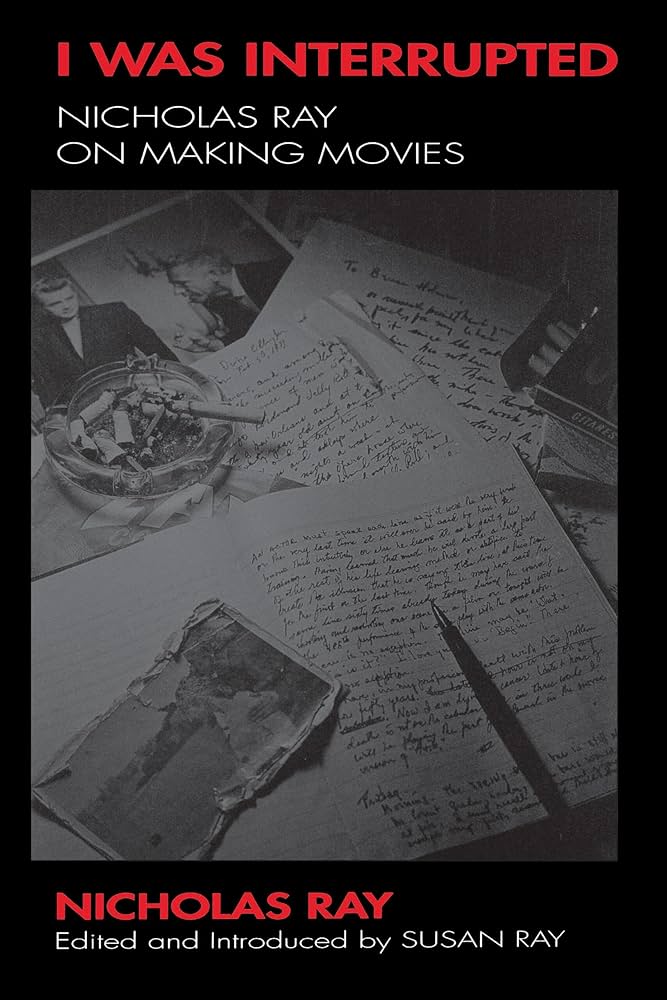
At college I had begun to make films and also hung out with the legendary Hollywood director Nicholas Ray, who directed “Rebel Without A Cause” and so many other great movies. So what I lacked in looks I thought perhaps I made up in the “being cool” department. My confidence was also up, as I began an affair with the hippest girl on campus – a lesbian – or rather bisexual – fine arts major named Roz with a round face, slender body and long, natural bright blonde hair.   Roz and I were in the same sculpture class and I watched her as she sensually worked the wet red clay on the spinning potter’s wheel – I know you’re thinking “Ghost” and you’re not far off. I was struggling with carving white alabaster stone, and was working on a Brancusi-like depiction of a sleeping muse. I was passionate about Brancusi ever since the Guggenheim’s Brancusi retrospective in the early seventies. In my last year of high school, I went to the Museum of Modern Art nearly every afternoon to sit alone in its Brancusi room, where I would observe the elegant Bird in Space, the Sleeping Muse, various Torso’s and other works of pure solid beauty and perfection.

brancusi muse

Constantin Brancusi, Sleeping Muse

Roz and I were working late one day and were the only ones left in the art studio. She came up to me, her hands wet with red clay, and smiled at me. “I’m a lesbian, you know,” she said. I knew that. Then she proceeded to wipe the red clay from her hands and arms onto my shirt and blue jeans. I began to feel humiliated and resentful, but then gave in to her manipulation. “I’m really bi,” she continued, “and you know I think you’re cute and I wonder why you never look back at me in class.” Now I was truly mixed up. Was she playing with me or seducing me? So I asked her if she was fucking with me.

She then reached her wet red arms around me and gave me a deep and long kiss. Now I figured she wasn’t playing with me – although I was completely baffled that she would have any interest in me whatsoever. But it was ego inflation for me, as she was popular on campus and hung out with the coolest of the campus hipsters – punk poets, jazz musicians and a gay dancer who today is recognized as one of the world’s leading dancer-choreographers.

She drove me in her Volkswagen Bug to the cabin she lived in on Quaker Lake across the border in Pennsylvania, about half hour from the campus. She shared the cabin with the gay dancer and his partner, who tragically died of AIDS a number of years ago. She led me to her bedroom – we got undressed and climbed into bed.  I reached over to kiss her and she suddenly pushed me away with considerable force. Of course I was once again perplexed. We were naked and under the covers. “Don’t even think of touching me,” she commanded, as if doing so would be an act of the utmost indignity. I said, “Ok, that’s cool.  But what do you want to do?” “I just want to lie in bed and want to sleep,” she responded. “And you are invited to spend the night with me in my bed.” That felt better, it was alright with me to take it slow and I very much liked being wanted. “But, I swear,” she added, “if you so much as touch me, I will castrate you.”

I stayed up most of the night, but got some sleep. In the morning, the most beautiful sunrise shone through the picture window in Roz’s bedroom, infusing the room with a deep red glow. I sat up and looked out the window – the rosy sun was rising over the shimmering lake like an impressionist painting. I wanted to tap Roz to show her, but was too afraid to touch her. So I  looked at her sleeping for a long while, her long blonde curls comfortable on her pillow, and she reminded me of Brancusi’s sleeping muse, and my own inferior attempt to sculpt a sleeping muse of my own. She looked gentle and nonthreatening in her sleep. So I softly whispered to her that the sun was out and it was beautiful. She opened her eyes and looked deeply into mine. Then she smiled. In an act of brazenness, I reached over to kiss her very gently on the lips. She responded by kissing me strong and hard. She then climbed on top of me and we made love.

sunrise lake

Roz cooked me whole grain pancakes for breakfast, with fresh blueberries and herbal tea. Her dancer roommates joined us. They were very much in love, and I am saddened today to know that one of them is gone. Roz was in a friendly disposition and we hiked around the perimeter of Quaker Lake, which was at least three miles, and a neighbor’s  bright red Irish Setter followed us most of the way. We swam at mid-day, and at night went dancing at the local town bars. We went on for a couple of months. Roz was seeing other women at the same time, but I was her only guy – as far as I knew.

That made me confident enough to ask the true girl of my dreams, Lizzy, out on a date. She had surely seen me around campus with the hipsters and arm in arm with Roz, and now I was good enough for her, I thought. I asked her out for drinks at a large, local bar – and she accepted. We danced to a medley of Rolling Stones and then found a small table in a corner. I told Lizzy I was in love with her – was always in love with her, since Reynolds Junior High, Lincoln High and through college. She must have thought me strange but I was being truthful. “What about your girlfriend, Roz,” she asked. “Are you in love with her?” “No, it’s not like that – she’s alright,” I said, “but we just hang together, nothing serious.”

And then I asked Lizzy to marry me. While we had seen each other around for years, we never exchanged a single word, did not know each other at all, and we were both juniors at college. But I knew in my heart that she was the “one.”  She shrugged off my proposal, figuring I had one too many beers and that I couldn’t possibly be serious. But like Jean Marais’ elegant Beast in Jean Cocteau’s “Beauty And The Beast,” I promised to ask her every night until she said “yes.”

beauty and beast

Jean Cocteau’s “Beauty and the Beast”

Lizzy and I dated on and off – mostly off – in college and for several years after college. I kept my promise and asked her to marry me every night, by phone, by letter, and on the very infrequent date, in person. I rather became a nuisance to Lizzy after a while, and she decided on a plan to free herself of what she felt was my obsession with her.  It was not an obsession to me but true love – but she wasn’t having it. Lizzy was now working as a paralegal in midtown Manhattan, and her co-worker, Dinah, was an attractive red headed paralegal who grew up in Scarsdale – her family was Wall Street rich. Lizzy hatched this idea to introduce me to Dinah – she thought Dinah and I would hit it off, that I would be happy, and that Lizzy would then be free to have what she wanted from me – to be my friend and nothing more.  It was a win-win idea – so it seemed to Lizzy.

upper east side

We met for cocktails at a piano bar on the Upper East Side after Lizzy and Dinah finished work. It was a three way date, but the set up was very clear. We had a couple of drinks, and Dinah was eying me intently, smiling at me, and Lizzy seemed to be right – Dinah was right for me – or at least, I was right for Dinah. She liked me. I was fine with her – not the kind of sparks I felt for Lizzy, but maybe it could grow to something more if given the chance. At any rate, this was cocktails – not an arranged marriage.

After the third round of drinks, Dinah reached under the table with her foot and rubbed my ankle. I thought that was sweet. But Lizzy noticed and became visibly perturbed. Why? I don’t know, as the whole idea was for Lizzy to set me up with someone else in order to gain her freedom and provide me with happiness at the same time. Dinah was getting a little tipsy, so I asked her how she was feeling, and was there anything she would perhaps like to do?

Dinah looked me squarely in the eyes and said, “You really know what I feel like doing? I feel like a good fuck!”

I liked that – it was straightforward and I like that in people. Lizzy lost it, however, and knocked over two of the drinks,  which fell to the floor in a loud crash, disrupting the mellow jazz piano and prompting several waiters and busboys to come over – it became all a great big fuss. Lizzy announced that we’d all had too much to drink and it was time to go. I told Lizzy I was fine, the waiters will clean things up – not to worry. Lizzy now firmly grabbed my arm – hard – and said “let’s go!”

brancusi bird in space

Constantin Brancusi, Bird in Space

Lizzy practically dragged me out of the bar. Dinah wrote her number on a matchbook and handed it to me with a wink and a smile. I thanked her and said I would call her. Lizzy hailed a cab and we were soon in my apartment in Park Slope, Brooklyn. “What a fucking slut!” Lizzy exclaimed. I told Lizzy I thought Dinah was rather sweet and that I liked people who say what they mean and mean what they say. Lizzy asked me to take her to my bedroom.  I just looked at her.  She then said, “I’m horny.” I was like, “really?”

Afterward, we were getting dressed. Lizzy turned to me, kissed me passionately and said, “the answer is yes.” I said, “yes what?” She responded, assertively, “I accept your marriage proposal of six years ago.” I wanted to remind her that the last proposal was yesterday, since I had kept my promise, like Jean Marais’ Beast, to ask her every night for her hand. So that was 2,190 proposals, give or take. But I wanted to quit while I was ahead, and asked her if she meant it. She did. But she wanted a very small wedding – just the two of us at City Hall.

* * *

Excerpt from a novel I have been writing called “White Sand Falling.”

(If you like this post and my blog please visit my facebook page here and click “like”)

{ 1 comment }

Happy New Year!

by Danny Fisher on December 31, 2010

My best wishes to everyone for a wonderful and bright New Year!

danny picture

“What we call the beginning is often the end
And to make and end is to make a beginning.
The end is where we start from…

We shall not cease from exploration
And the end of all our exploring
Will be to arrive where we started
And know the place for the first time…

And all shall be well and
All manner of thing shall be well
When the tongues of flame are in-folded
Into the crowned knot of fire
And the fire and the rose are one.”

from “Little Gidding,” No. 4 of “Four Quartets” by T.S. Eliot

(If you like this post and my blog please visit my facebook page here and click “like”)

{ 1 comment }

Alan

by Danny Fisher on December 29, 2010

alan and esther, vienna, closer_0004

Alan and Esther, Vienna, 1946

In 1944, my father got together with a dozen of his companions in a German forced labor camp. He knew what happened to his family, and he realized the only way out was to plan and implement an escape, however risky and dangerous.  They all agreed on a plan.  In the middle of the night, more than half dropped out, too afraid of the odds of near certain capture and execution.  There were now five including my father and they leaped over the fence under cover of night, somehow escaping the notice of the patrolling SS guards.  They wandered through the woods for days. For food and drink, they stopped at isolated houses belonging to local farmers. My father’s group had no weapons, but local villagers supplied them with water and an occasional crust of bread – more out of fear than sympathy.

forest

They arrived in a German town on Christmas eve, where townspeople were celebrating along with SS officers.  My father’s group disguised themselves as Germans in an attempt to blend in.  My father knew German, although his accent was suspect and he was careful to avoid speaking.  The group of five found themselves in a tavern, where the locals and SS officers were singing Christmas carols in German.

I am reminded of the tavern scene in “Inglorious Basterds,” which was very well done and tense.  This, however, was not a movie, but part of a life story and an indelible memory for my father.  Everyone began to sing “Silent Night” in German, and the SS noticed that my father’s group was not singing.  The SS did not suspect my father’s group and encouraged them to sing along.  My father did not know the words, but he was able to mouth the words along with the group convincingly enough to stay alive.

The group arrived at a barn at the edge of the town – it appeared to be a good spot to spend the night. They gathered hay to make beds on the floor of the barn.  One of the group went outside of the barn to pee against the wall of the barn.  He did not notice the pair of SS guards that were patrolling nearby.  He unbuttoned his pants and the SS guards, who were quite drunk, began to laugh at the sight.  Suddenly, their mirth turned to shock – they noticed the man was circumcised.  They walked up to the man, who suddenly realizing his predicament, quickly buttoned his pants – but it was too late.  They put a gun to his head and demanded he expose himself.  The man unbuttoned his pants.  Inside the barn my father and the rest of his group heard loud gunfire piercing the night.  They were terrified and scrambled to hide.

The SS guards called for reinforcements, and there were now a dozen SS officers inside the barn.  One by one, the SS found each of the hiding men and forced them to strip.  One by one, each of my father’s group was executed, the sound of the gunfire followed by the thud of a falling body and the laughter of the SS troops.  My father lay motionless and undetected beneath a thick pile of hay, holding his breath for what seemed an eternity.  He was close to a horse that was in the barn, and felt that the horse knew of his presence.  The SS troops took one last look around, leaving the bodies in place, the blood soaking in the hay.  An SS officer went up to the horse near my father and began to stroke its mane. “What a beautiful horse,” the officer said in German.

My father stayed motionless under the hay until dawn without sleeping.  He carefully exited the barn and then raced through the countryside as fast as he could, getting as far away from the town as he could.  He wandered several more days in the woods, hungry and thirsty.  Suddenly he heard the voices of soldiers and dropped to the ground.  The soldiers were not speaking German, but another language, one that he did not know well but recognized.  It was Russian. My father emerged from the woods and walked up to the group of Russian soldiers, who were standing outside their truck.  They pointed their guns at him and he raised his arms.  “Who are you?” they shouted in Russian and then in German.  My father understood the German.  “I am a Jew,” he cried in his broken Russian.  The Russians laughed and lowered their weapons. “Who are you with?” they asked.  My father explained that he was the only survivor of his group.  “Have some water and something to eat,” they said.  “You are a free man.”  He drank water and ate chocolate and bread.

My father made his way back to his small home town in Czechoslovakia, in the Carpathian mountains.  My father today has a bungalow in the Catskills, and the rolling hills outside his bungalow resembles the Carpathian mountains of his youth.  My father was 21 when he became a free man in a forest in Germany – my youngest son is 22 and is attending film school in Manhattan.  My father surveyed his home town.  He was the only Jew in the town, half of whose population before the war was Jewish.  My father met a girl he knew from his youth, a gentile, whose family was kind.  He became engaged and the girl’s family looked forward to the wedding.  But my father wondered if there were other Jews who survived the war.  He spoke with his fiance’s father and said before he could marry the man’s daughter he needed to travel through Europe to learn whether any of his family or friends survived.  My father said he would return, but he never did.  He traveled through Europe and ended up in Vienna.  On a street corner, a bespectacled man with a briefcase approached him and handed him a leaflet.  The man was locating Holocaust survivors and organizing groups for eventual emigration to Palestine.  My father joined a commune in Vienna that was set up for displaced Holocaust survivors.  Everyone was young and the atmosphere was filled with joy and hope. My father met my mother there, and before long they were married.

alan esther wedding_0001

Alan and Esther’s wedding, commune in Vienna, 1946

In 1947, my parents boarded a sister ship of the “Exodus” called the “Theodore Herzl” – named after the 19th century founder of Zionism, which was a movement that advocated the return of Jews to their ancestral homeland – and both ships were bound for Palestine.  As with the “Exodus,” my parents ship was stopped by a British blockade outside the Mediterranean port of Haifa.  The Jewish passengers through bottles and anything else they could find at the British, but the ship was turned back.  My mother was pregnant.

Alan and Joe, Cypress_0002

Alan with son Joe, Cyprus detention camp, 1947

The “Theodore Herzl” arrived  in Cyprus, where my parents lived in tents at a detention camp, with their future hopeful but uncertain.  My mother gave birth there to my oldest brother, Joe, and that was cause for great hope, joy and the affirmation of life.

Cyprus card half_0003Alan and Esther, with first son Joe, Cyprus detention camp, 1947

* * *

Excerpt from a novel I have been writing called “White Sand Falling.”

(If you like this post and my blog please visit my facebook page here and click “like”)

{ 0 comments }

Esther

by Danny Fisher on December 27, 2010

Esther_0001

I continue to make progress in my efforts to rebuild my life, my business and my career.  But as I think about what my parents went through, I feel that what I am rebuilding is nothing.  My parents truly rebuilt their lives after they and their families were devastated in the Holocaust.

angel of death chagall

Angel of Death, Marc Chagall

My mother was a beautiful girl – just 16 years old – when she was rounded up and put on a cattle car bound for Auschwitz.  Her sister was even younger, just 13.  When her train arrived at Auschwitz, she was quickly separated from her mother and most of her brothers and sisters – they were never again to be seen and soon disappeared into the black smoke that rose from the tall smokestacks at Auschwitz.

My mother and her sister were forced to strip naked, their hair was cut and their heads were shaven and my mother watched with tears as her sister’s beautiful locks of curly hair fell to the ground.  Doctor Mengele, Auschwitz’s notorious “Angel of Death,” examined my mother each day as she stood in line and Mengele made his “selections” – who was to live and who was to die.

My mother had a boyfriend who was put to work in the crematorium and who knew the fate that soon awaited him.  He saw my mother and pleaded with her to do anything she could to get out of Auschwitz – anything.  He forced her to repeat the following words to him out loud:  “I will do anything to get out of Auschwitz.”  Soon after his warning, the German SS were rounding up the most beautiful girls to be taken somewhere – my mother did not know where but suspected the worst.  She remembered what her boyfriend had made her swear – he had already disappeared into the black clouds that hovered over the camp – and she raised her hand and called out to the SS soldiers and asked to be taken.  A fellow inmate was horrified and said to her:  “Are you crazy? Do you know where they are taking you?  For the pleasure of the Nazis!”  But my mother decided to keep her promise to her boyfriend.  Her instincts were to survive.

She survived.

Cyprus card half_0003

Esther and Alan, Cyprus, 1947

After her liberation, she learned that her 13 year old sister had survived, too. They embraced in tears and in joy and the first words her sister exclaimed were: “I’m a virgin!”  My mother answered, “I am, too!”  And they hugged and cried on the street corner for a long time.  My mother told me this story, among many others.  I will never know what she had to do to survive, and it is possible that whatever she had to do, along with so many things she experienced, were just too shocking for even her to recall.  But she did have recurring nightmares throughout her life.

esther with baby_0002

The worst nightmares she had, however, were in Auschwitz.  Sleeping on cold planks in barracks with hundreds of other starving inmates, she would awaken from her nightmares only to find herself in a reality that was even worse than her nightmares.

Esther light candles

My mother passed away four years ago, from Alzheimer’s.  As she deteriorated from the disease, she began to mistake me for one of her younger brothers who did not survive the death camp and she called me by his name whenever she saw me.  I took her aside once and explained to her that I was her son, not her brother, and that her brother was murdered by the Nazis.  She laughed and claimed that I was speaking nonsense and said, “why would anyone want to murder my young brother – he was so sweet and innocent and just 12 years old – and besides I just saw him riding his tricycle and you are speaking complete nonsense that anyone would want to murder innocent people like my little darling brother for no reason.”

I did not cry when my mother lay in a coma for days at a hospice in Brooklyn in her final hours.  I did not cry at her funeral.  I cried when she sent me a birthday card shortly after she was diagnosed with Alzheimer’s, while she was still able to communicate.

She wrote: “God has blessed me with a wonderful life.”

The photograph above is of my parents, taken in 1947 at a Cyprus detention camp, where my parents were refugees and waiting and hoping for a chance at a new life, in Palestine, soon to become Israel.  There is joy in their eyes, the joy of liberation, the joy of a new beginning – the joy of life.

“We were slaves unto Pharaoh in Egypt, and the Lord took us out from there with a strong hand and an outstretched arm. If the Holy One, blessed be He, had not taken our fathers out of Egypt, then we, our children and our children’s children would have remained enslaved to Pharaoh in Egypt.  Even if all of us were wise, all of us understanding, we would still be obligated to discuss the exodus from Egypt.” – From the Haggadah of Passover.

* * *

Excerpt from a novel I have been writing called “White Sand Falling.”

(If you like this post and my blog please visit my facebook page here and click “like”)

{ 3 comments }

Rachel

by Danny Fisher on December 22, 2010

rachel

My parents kept kosher and went to Shul on the high holy days. But while my father observed most of the customs, including fasting every Yom Kippur, he was quite open about his being fundamentally an atheist. God left him in a single moment; he was 17 years old and working as a tailor’s apprentice in Hungary when he received a postcard from his parents that had no return address. It read “We are being taken away by the Germans. We don’t know where. We don’t know if we will ever see you again.” My father knew he would never see his parents again – and he didn’t. He broke down crying, and could not understand how there could exist a deity, a God, that would allow such innocence – his hard working parents who always gave whatever they had to the hungry in the neighborhood – to be rounded up abruptly from their homes and herded into cattle cars that would take them to the gates and fires of hell. At that moment, that instant, God left him, and He has been gone for him to this day. My father had until then worn long side curls called payot that was a sign of orthodox observance. After receiving that note from his parents, he cut his side locks.

Rachel Goldstein was one of my closest friends at Lincoln High School. Rachel had a religious upbringing and we used to have a lot of talks about religion. I was always struck by how passionate Rachel seemed to be about it. I usually get annoyed when people try to convince me about matters of religion, but with Rachel, I always felt that when she talked about God, talked about the meaning of keeping kosher and respecting the Sabbath, she was sharing with me a part of herself, and it did not matter that I didn’t believe in the rituals. I believed in the sincerity that shone in her open and friendly green eyes. I asked her why not drive and turn on electric lights on Saturday, the Sabbath – how could that possibly be relevant to modern life – and how, in fact, does that constitute the concept of “rest” – as God rested on the seventh day. Rachel responded that the concept of rest was philosophical and spiritual – not literal. It was actually a great deal more physical work to walk up the 13 flights to her parents’ Brighton Beach apartment on Ocean Avenue than taking the elevator – how is that “rest?” For Rachel, respecting the Sabbath, resting on the Sabbath, meant taking one day, 24 hours, where one could remove oneself from the machinations and machines of daily life, as while the elevator was a comfortable ride, countless people had to work to provide the electricity to make the elevator work, and resting on the Sabbath meant respecting the separation from anything related to work, even if the work was not one’s own. I am not observant, but I do like the concept of one day off a week – no phones, no work of any kind. The only time I really adhered to that idea was the two years I spent writing my screenplay “Interrupted,” during which I worked from 5am to 10am Monday through Friday and all day Sunday – while skipping Saturday completely. I don’t know if that was spiritual or just good discipline, but the process worked for me.

I never felt comfortable around Rachel’s parents. Her mother, Leah, was a harsh and stern figure, and it never seemed possible to look at her without noticing the grim green tattoo of numbers branded on her arm. I couldn’t help but think that Rachel’s mother wanted you to be continually reminded of her sorrowful past, wanted you to feel guilty, and that made me resent her. She was in the same barracks at Auschwitz that my mother was in. Rachel’s father, Isidore, was quiet, and kept to himself. It was mind boggling to me that Isidore had been a member of the Irgun – the underground Jewish militant group in Palestine that was responsible for blowing up the King David Hotel and other acts of sabotage against the British authorities. A militant named Isidore – how ridiculous is that? When you spoke with Isidore about anything, he would look at you and mumble something about the past, which you couldn’t quite make out, but knew had to do with some unspeakable act of horror.

abraham and isaac

In her parents’ apartment, Rachel used to read me stories from the bible, and explain the significance, the hidden meaning of the allegories – Jonah being swallowed by the whale, Abraham about to sacrifice Isaac. I didn’t believe the stories held any deep meaning, but it was comforting to know that she, at least, had faith in something, even if I did not. I never felt that Rachel was trying to indoctrinate me, or to convince me, and that made her special. She introduced me to her orthodox friends in Brighton Beach, and I found myself at parties in which I was the only guy not wearing a yarmulke. I never felt compelled to put one on in order to better blend in, and none of her friends ever made me feel unwelcome at their gatherings.

Rachel and I did not stay in touch after we both graduated Lincoln High. She married soon after high school and did not go to college. I was at her wedding but was not happy about her marriage. I should have been happy for her happiness – and maybe I would have, had I been convinced that her new husband would treat her well – but something about him rubbed me the wrong way. I wondered if she had the kinds of conversations with him that she had with me, the conversations of two young people with different upbringings, different values, who were genuine in their desire to get to know more of each other, although in our case as platonic friends. The wedding seemed phony, as all weddings are to me. Their joy was manufactured for the flash of the photographer’s camera, which would provide a framed frozen moment that would gather dust on a bedroom dresser for years.

I had not heard from Rachel for several years after her wedding. Then one night she called me, distraught. She had learned her husband was having an affair. He was rarely home, and she knew he went to Paradise Island for a few days with his lover, a blonde shiksa who was a paralegal at his law firm. What a piece of shit, I thought – I knew I got him right. Rachel was lonely, hurt and felt abandoned. She asked me if I would have drinks with her in Forest Hills, where she and her husband lived. I felt weird about it, but said “sure.”

dunhill

We went to a Polish restaurant in Forest Hills and had pierogies and wine. Rachel surprised me when she took out a pack of Dunhill cigarettes and lit up. I rarely smoked but decided to join her – it felt rebellious and independent. She seemed more of a free spirit that night than the Rachel I had known years earlier. I felt close to her, and our rendezvous reminded me of our high school years, and of our warm, mystical talks about God and His designs. She looked as friendly and appealing as she did when she was fifteen. But she was now twenty-one – and as I studied her I wondered why I never before noticed that she was rather nice to look at. The last time I had seen Rachel, she was wearing the stiff white costume of her wedding day. Now she was wearing worn jeans with patches, sneakers and a knitted green top, which accentuated the color of her eyes.

pot of tea

We went to her apartment and she made a pot of tea, and we sat on the living room couch. There was something unsettling about being in an apartment that belonged to a married couple, yet something that was somehow exciting in a way I could not explain to myself or admit to myself. I asked her about her husband, and why he was such a shit. It was clear that she didn’t want to talk about him. We sipped tea, and for a long while there was silence. There was just the clinking of our cups against the saucers. Rachel looked down, and tears began to stream down her face. I felt bad for her; I knew she had been imprisoned in a home that was not a happy one. She then gathered herself, and apologized for being so morose and gloomy, and for inviting me to wallow in her cheerlessness. She said had not slept since the night before last, and was going to go to bed. It was late, and she invited me to stay over and sleep on the couch, and I accepted.

Rachel brought out some blankets, sheets and a pillow and made a comfortable bed of the couch in the living room for me. She apologized for the accommodations, and I told her she was apologizing too much, and it was not necessary. She said good night, and then went into her bedroom, closing the door behind her. I was not tired, but I undressed and settled into the couch under the sheets and blankets and lay there. I heard the distant sound of the subway and some passing cars. But most of all I heard the sound of my own breathing. I could not imagine feeling more alone than she must have felt.

pajamas

After a short while, Rachel came out of her bedroom and walked over to the couch. She looked slender and somewhat silly in her pajamas that were printed with various animals – it made me think of Noah’s ark. She sat down on the couch next to me. My heart began to race, and suddenly there was no air left in my lungs. She just sat alongside me without saying a word, and stared straight ahead at nothing in particular as I lay on my back, feeling her radiant warmth beside me. I looked at the way the waves of her long brown hair settled against her animal print pajama top and found the image somehow ironic. It was startling to me that her scent had not changed at all since she was in high school and memories of her then combined and united with the sensations of the present to form a jarring, exotic reality that seemed unreal. She then turned her gaze toward me, and I looked into her sad green eyes. She got up again, brushing my hand ever so lightly with her hand as she did so – I did not know if that brush was an accident, but there are no accidents – and walked tentatively back to her bedroom, without looking back at me. She left the door to her bedroom open a crack and I heard her climb back into bed and under her covers. This was one of those times when one must make a choice. And making no choice would be a choice, too.

I got into her bed and under the covers. We lay in bed a long time without saying a word, and without touching. The sound of my breathing was now the only sound I heard. My chest tightened unbearably. Rachel was wide-awake, and her face betrayed an expression of neither sadness nor longing, but perhaps wistful inevitability. I moved next to her, and she pulled the bed covers over both of our heads. We became submerged and our bodies intertwined in our own private domain of smothering darkness, breaths and the warmth of unimaginable sweet touch and scents that converged and amplified in an intoxicating intensity.

There is only one God, Rachel had told me years ago – and God is one.

* * *

Excerpt from a novel I have been writing called “White Sand Falling.”

(If you like this post and my blog please visit my facebook page here and click “like”)

{ 6 comments }